Oliver Brown, the civil rights activist
All articles in the series Oliver Browns:
Sharing a name with someone is usually unremarkable. Sharing it with the plaintiff in a landmark Supreme Court case is rather less so. I have Googled myself since before Google was even a thing, so I have known about Oliver Leon Brown for a while.
Oliver Leon Brown
Oliver Leon Brown was a welder and part-time minister in Topeka, Kansas. In 1950, the local NAACP recruited him as one of thirteen parents to sue the Topeka Board of Education over racial segregation in the city’s public elementary schools. His daughter Linda was among the children denied entry to the nearest white school.
The case made its way to the Supreme Court, consolidated with four similar cases from other states. Brown happened to be first alphabetically, so it became Oliver L. Brown et al. v. the Board of Education of Topeka.
The decision
Eventually the court ruled unanimously on 17 May 1954 in favour of the plaintiffs, overturning the “separate but equal” doctrine established by Plessy v. Ferguson in 1896, holding that racially separate schools were inherently unequal and unconstitutional.
The Monroe School
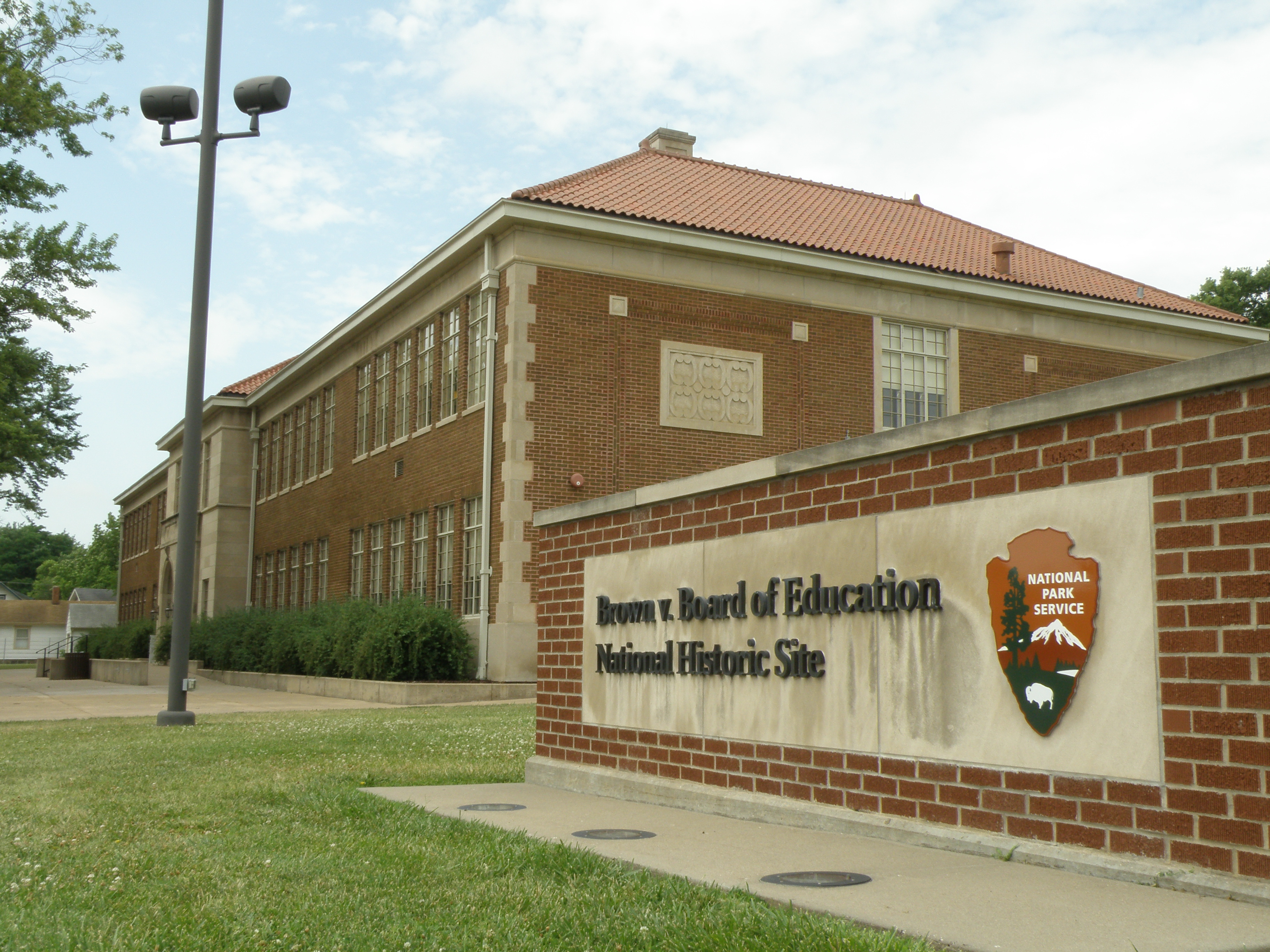
The Monroe Elementary School, one of the four segregated Black schools and Linda Brown’s own, is now the Brown v. Board of Education National Historic Site. Oliver’s family founded the Brown Foundation in 1988 to preserve the case’s legacy.
Finding a historical figure who shares your name is not particularly surprising (especially with my surname). Finding one whose name is on a case that changed American constitutional law is. If I ever find myself in Topeka, I will certainly visit the historic site.